Introduction to Canada and its people
Canada (/ˈcaːnɑːdʒə/ (listen); also spelled Canada (listen); is the second largest country in the world, after the Russian Federation, and located in the far north of North America.
Canadian territory stretches from the Atlantic Ocean in the east to the Pacific Ocean in the west, and borders the Arctic Ocean in the north. To the south, Canada borders the United States with the world's longest unprotected border.
Canada's northwest borders the U.S. state of Alaska. Canada's northeast is bordered by the island of Greenland (Danish). On the east coast are the islands of Saint-Pierre and Miquelon (French).
Origin of name Canada
The word Canada is derived from Huron-Iroquois kanata, meaning “village”, referring to Stadacona, a location currently located within the City of Quebec. In the past, Canada was often referred to as the Dominion of Canada, but now all official documents use only the name Canada.
As judged by historians and archaeologists, the Canadian Indians were nomadic peoples from the Indo - Tibetan - Chinese region. Between 10,000 and 12,000 BC, these people arrived in the Americas.
For reasons such as being chased by enemies, hunting creatures, or finding new homes, they happened to cross the ice sheet of the Bering Strait to Alaska. From there, they continued to migrate throughout the North American continent, the Caribbean and South America, developing into tens of thousands of new tribes.
The Inuit are believed to have come from Siberia, Russia. They also migrated through the Bering Strait, but settled entirely in northern Canada, from the 60° latitude upwards.
Around the year 1000, a few Vikings in northern Europe arrived in Newfoundland. But they did not settle there, but returned to the country.
European Colonial Era

Around the end of the 15th century, several European explorers followed Christopher Columbus in his exploration of the Americas.
In 1497, John Cabot explored Newfoundland and claimed the land that belonged to England. In 1534, Jacques Cartier founded the area of the Saint-Laurent River for France. In 1603, Samuel de Champlain founded the first settlement, Quebec on the banks of the Saint-Laurent River and became governor of New France (Nouvelle-France) in North America.
British and French companies came to North America to trade with the natives, the most important commodity was fur. From there, land disputes and trade control took place continuously. The French-friendly Huron tribe was destroyed by the British-friendly Iroquois tribe.
The French colony was put in danger. The French king quickly introduced policies to attract more immigrants to New France. By 1760, the population of New France had grown to 70, 000.
In 1756, the Seven Years' War between the French colony and the British colony in the Americas broke out. In 1759, the British general James Wolfe led his troops to attack Quebec City of the French lord Louis Joseph de Montcalm-Gozon and won. 1760, the French city of Montréal was conquered by the British. 1763, England and France signed a peace treaty. France ceded the entire colony of North America to Britain.
British Colonial Era
New France after belonging to Britain was renamed Quebec. The people (French speaking) and the government (English speaking) opposed each other. Governor James Murray resolved by dropping British laws and granting French speakers more rights.
1774, Guy Carleton was given governorship by the King of England and issued the Quebec Act (Quebec Act). Accordingly, the French majority will have more rights in the government. This caused discontent for many people of British descent.
In 1776, the United States gained independence, and people loyal to the British king but unwilling to oppose emigrated to Quebec. The British population grew significantly there, and the Constitution Act was born.
It divided Quebec into two provinces: Upper Canada (present-day Quebec) of French-speaking people and Lower Canada (present-day Ontario) of English-speaking people.
In 1838, the rebellion between the British and French in the Upper and Lower provinces took place. The two peoples fought in disorder in the streets, the death toll was very high. This caused the British king to send Lord Durham to Canada.
Durham created the Act of UNI0N, which merged the two Canadian provinces into one. Durham hoped that this would make it easier for the French to assimilate and rule. The French-speaking population opposed the government and sought ways to maintain French culture.
In 1858, Britain opened up the colony of British Columbia on the Pacific coast, located in the Northwest of North America.
Federal establishment
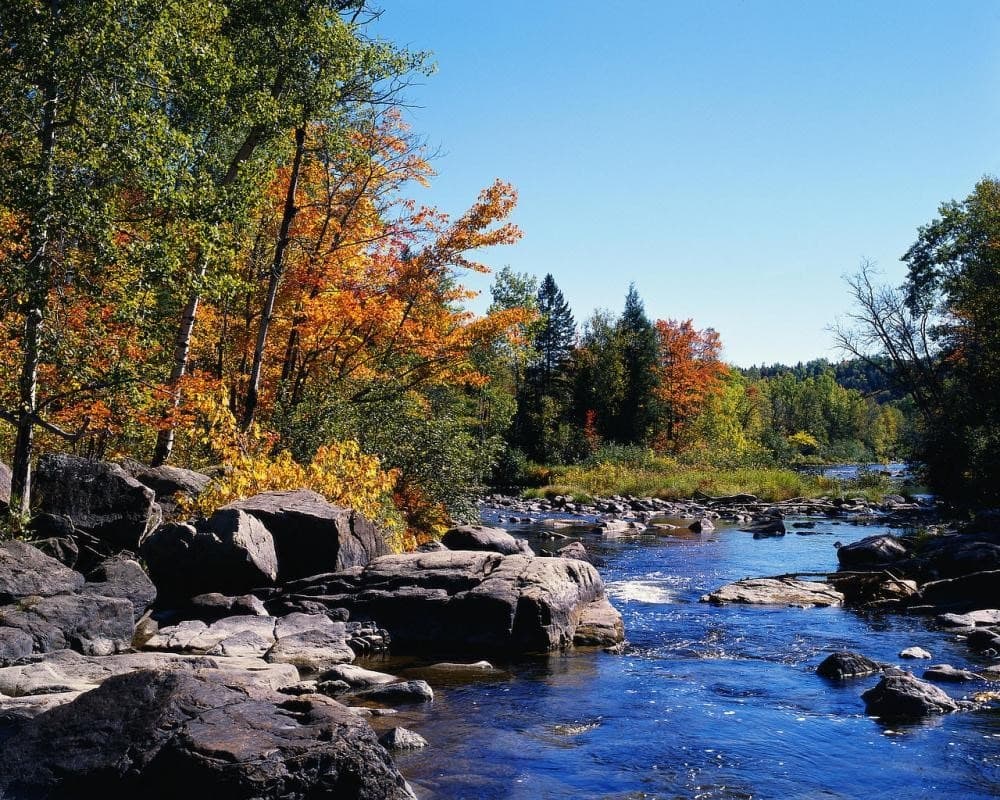
On July 1, 1867, John Alexander Macdonald inaugurated the Dominion of Canada under the British North America Act. Canada consisted of four provinces: Ontario, Quebec, Nova Scotia and New Brunswick.
1870, Manitoba joins Canada 1871, British Columbia joins 1873, Prince Edward Island joins 1905, Alberta and Saskatchewan joins 1949 Newfoundland joins.
1982, the Canada Act was passed. Quebec was the only province that did not agree to pass it. Lake Meech Accord negotiations between Prime Minister Brian Mulroney and Quebec Premier Robert Bourassa to persuade the province to sign the act failed.
Population and ethnic composition
The population of Canada in 2005 was estimated at around 32 million people. Despite being the second largest country in the world – around 10 million square kilometers – Canada's population density is extremely low – around 4 people per square kilometer. Canada is larger than the United States but its population is only 1/9 of that of the United States.
Before the 19th century, all Canadians were Aboriginal, British and French. It was not until the Second World War that Scottish, Irish and Eastern Europeans began to immigrate to Canada. Since 1945, Canada's ethnic cultural appearance has grown richer due to the increasing number of immigrants from Southern Europe, South America, the Caribbean Islands, the Middle East and the Asia-Pacific. Today Canadians come almost from all over the world.
According to the most recent census results, more than 50% of the population is of non-British or French origin. Among them, the number of non-white people accounts for 13%; Aboriginal people, accounting for 3%; Scottish people, accounting for 14%; Irish people, accounting for 13%; Germans, accounting for 9.25% and Italians, accounting for 4.3%. This number will increase further as “globalization” progresses.
Language
The two official languages of the Canadian Confederation are English and French. Nearly 60% of Canadians have English as their mother tongue, 22% French. The vast majority of French speakers live in the province of Quebec, followed by the provinces of Ontario, New Brunswick and Manitoba. Some Aboriginal languages are also considered official languages in the Dominions, especially Inuktitut.
Many of the native languages have been extinct or are coming to that status. Other languages spoken by many people are: Italian, German, Mandarin, Cantonese, Spanish.
Quebec is the only province in the country to enact a French Language Protection Act, which aims to protect its most distinctive North American cultural identity. However, the language and educational rights of English-speaking and Aboriginal communities are also protected. In addition, the people have the right to use either English or French while communicating with the government.
Economy
Canada is a developed country (G8) and is self-sufficient in energy. Canada's main economy is based on natural resources. Canada's largest export partner is the United States, followed by Japan and the United Kingdom. Import partners include the United States, China and Mexico.
Canada is a member of the G8 and the North-American Free Trade Association (NAFTA). On the European side, Canada belongs to the North Atlantic Treaty Organization (NATO); on the Asian side, Canada belongs to the Asia-Pacific Economic Cooperation (APEC).
Canada is a member of the United Nations and is well known internationally for maintaining peace in war - torn areas.
Politics
Canada is a confederation consisting of 10 provinces and 3 territories. The Canadian Confederation is a confederation based on a constitutional monarchy and parliamentary democracy.
The head of state of Canada is Queen Elizabeth II, who reigns in England. At the request of the Government of Canada, the Queen appoints a Canadian to represent her as the Governor General (Governor General of Canada; Gouverneure générale du Canada), or Respectfully called Queen's Representative. The Government of Canada is established by the Parliament of Canada (Parliament of Canada; Parlement du Canada) elected by the people.
The National Assembly consists of two chambers: the Senate (Senate; Sénat) which represents the regions, provinces and various cultural nuances of society, and the House of Commons ( Chambre des communes) which represents the entire population. The task of the National Assembly is to draft and promulgate laws for the Government to enforce.
Headed by the Prime Minister (Prime ministre), the Prime Minister directs the Government and presides over a Cabinet (Cabinet) consisting of several Ministers (Minister) and advisers.
During the sessions of the National Assembly, the Government is obliged to answer questions from the opposition, especially the Official Opposition (L'Opposition Loyale de Sa Majesté), about its programmes of action. These hearings before the National Assembly can lead to discredit – and overthrow – the Government. When the Government is overthrown, the National Assembly is dissolved. The people elect a new National Assembly to form a new Government.
Canada currently has four major political parties: the Conservative Party, the Liberal Party, the New Democratic Party and the Québécois Bloc.
Military
The Canadian military defence forces are called the Canadian Armed Forces. Canada is a member of NATO (North Atlantic Treaty bloc). In this organization, the Canadian military is called the Canadian Forces.
Canadian forces have served in major wars such as the South African War, World War I, World War II, the Korean War, the Vietnam War, the Gulf War, and the Afghanistan War.
Canadian forces have been assigned peacekeeping missions by the United Nations since 1956, and have completed 42 different missions around the world. At the end of World War II, Canada was the fourth most powerful military nation in the world.
Culture
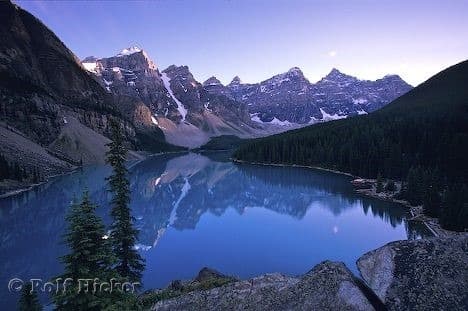
Canada is a multicultural country. Especially in major cities such as Toronto, Montréal, Vancouver, the diversity of peoples in the world is even more pronounced. In addition, contemporary art is very developed.
There are thousands of structures, galleries, museums and art academies throughout the country. Canada is also one of the world's largest countries with a film and music scene.
Canada is a member of both the Commonwealth of Nations (the Commonwealth of Nations) and the Francophonie, and of many other international organizations.
Canada has hosted the International Games twice: in Montreal (Expos'67) and in Vancouver (Expos'86); three Olympic Games: in Montreal (1976 Summer Olympics), in Calgary (1988 Winter Olympics) and in Vancouver (2010 Winter Olympics).
Provinces and autonomous territories
Canada has 10 provinces and 3 autonomous territories in the North.
The provinces of Canada are called provinces in keeping with the tradition of their time as actually provinces (or provinces) of the British Empire. In fact, each of these administrative units is an autonomous state (relatively, but not completely, like a state – state – of the United States or a state – Bundesland – of Germany) with a government consisting of their own executive, judicial, legal, tax, educational, health, social ... systems.
To avoid confusion with other provinces, the Vietnamese community in Canada has called this administrative unit a province. The word province has been used very commonly in Vietnamese newspapers published in Canada, but many people still use the word province, especially in everyday usage.
The administrative mechanism of each province is similar to that of the Commonwealth. At the request of the Prime Minister of Canada, the Queen appoints a resident of the province as her representative (Lieutenant governor).
Legislatively, instead of having two chambers like the federal one, the parliament of each province has only one chamber with a different name depending on the province. Legislatively, the party that holds the majority of seats in the parliament forms the government, the party that holds the second most seats forms the official opposition.
Theo Wikipedia
Please contact: Greatlink International Study Abroad Co., Ltd.
Hotline: 0936773386
Email: [email protected] or