I- General matters:
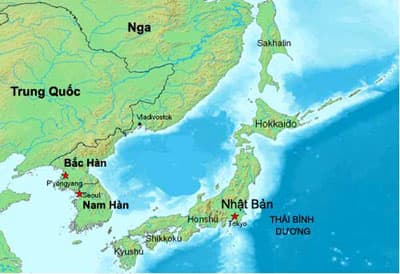
- Name of the country: Republic of Korea, abbreviated to Korea. The official English name is Republic of Korea. (not called South Korea, South Korea, Republic of Korea).
- Capital: Sister Un (Seoul), population 10.42 million (12/2007).
- Major cities: Busan, Taegu, Taejon, Kwangju, Inchon, Ulsan.
- Geographical location: In the South of Korea Peninsula; East, West, South bordering the sea; North bordering Korea through the military boundary running along the 38o North latitude.
- Area: 99.392 km2 (the whole peninsula: 222.154 km2)
- Climate: The climate is temperate, with 4 distinct seasons.
- Population: 48.4 million (11/2008).
- Ethnic group: Only 1 ethnic group is Korean (Korean).
- Religions: Buddhism 10.7 million; Protestantism 8.6 million; Christianity 5.1 million; Confucianism 104 thousand.... (2005).
- Language: Korean (one spoken, one written).
- Currency: Won.
- National Day:
- October 3rd, 2333 BC: National Day, also known as the Feast of the Enlightenment. Representative missions abroad held receptions.
- August 15, 1945: Liberation Day (of the Korean Peninsula from the Japanese occupation). A solemn celebration was held, the President delivered a speech. Leaders of countries sent congratulatory telegrams.
- August 15, 1948: Establishment of the Government of the Republic of Korea.
- Current key leaders:
- President: Lee Myung Bak, from 25 February 2008.
- Prime Minister: Han Sung Su (Han Seung Soo), from 29 February 2008.
- Chairman of the National Assembly: Kim Hyong O, from July 10, 2008.
- Minister of Foreign Affairs and Trade: Yu Miêng Hoan (Yu Myung Hwan), from 29 February 2008.
Ii- general history, country, people:
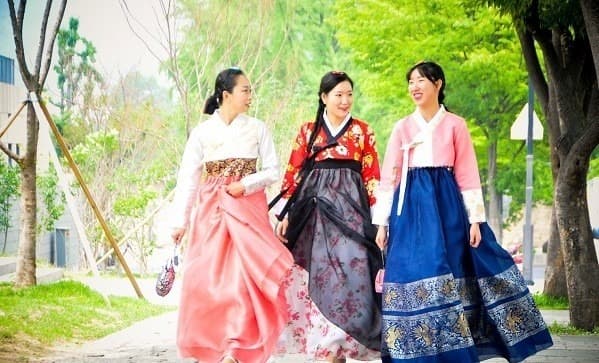
1. History
The Korean people have about 5,000 years of history. In 2333 BC, the Ancient Kingdom of Korea (Ko Choson) was born, including Manchuria, East China (now in China) and the Korean Peninsula. This state existed for about 1,000 years, successively invaded by the Zhou, the Han (China) dynasty.
From 57 BC, three new feudal states were formed, Koguryo (covering the northern Peninsula and Manchuria, China), Paekche and Shilla (the southern Peninsula), also known as the Three Kingdoms period. In 668, Shilla annexed Kokuryo and Paekche, establishing the Shilla dynasty that united the peninsula, lasting nearly 3 centuries (668-918). From 918-1392, King Wang Kon founded Koryo (Kaolian, the kingdom), taking the capital Kaeseong. From 1392-1910, King Song Gye founded Choson (Korea, the Li dynasty), leaving the capital to Si Un (1394), King Sejong (the fourth kingdom) created the alphabet that is still used today.
In 1910, Japan annexed the Korean Peninsula. In 1945, the Korean Peninsula was liberated and divided, forming two states under two different socio-political regimes with the 38o North latitude as the boundary: the South is the Republic of Korea (commonly called Korea, English name Republic of Korea) and the North is the Democratic People's Republic of Korea (commonly called Korea, English name Democratic People's Republic of Korea).
On April 25, 1950, the Korean War broke out, first between the two Koreas and then the engagement of the US Army and some allied forces, then the engagement of the Chinese Army. The war ended in 1953; the US and the DPRK signed the Armistice Agreement.
2. Country and people
a) Culture and society:
- In the past, South Korea was a country with only one ethnic group and one voice. However, this factor is changing due to South Korea's increasing international integration. South Korea is turning into a “multi-ethnic, multicultural" society. As of May 2008, in South Korea, there were nearly 900 thousand foreigners living: laborers were 437.7 thousand people; people married to Koreans were 144.3 thousand, the vast majority of women, of which 58% were Chinese, 22.2% came from Southeast Asia, 40% of rural Korean men married recently were married to foreigners.
- Due to many influences of Confucianism, Koreans attach great importance to rituals and order. In particular, they attach great importance to blood ties, fellow students and compatriots. Young Koreans today tend to favor American and Japanese culture...
- Korea has a relatively developed cinema, music and fashion in Asia. Korean culture is being strongly imported into many Asian countries with the name "Korean cultural wave".
- Characteristic of Korean dishes is spicy and salty. The famous dish is Kim-chi (salted vegetables often with peppers), barbecue (tripe, beef), cold vermicelli ...
b) Scenic spots:
Korea has many monuments recognized as UNESCO World Heritage Sites such as:
- The Chang-deok Palace (German Chang-dek Palace): completed in 1405 and in December 1997 it was designated a UNESCO World Heritage Site.
- Su-uan Hua-chang (Hua Cheng Valley): completed in 1796 and in December 1997 recognized by UNESCO as a World Cultural Heritage Site.
- Am Soc-kun (The Marble of Am) – Bun-kuc Temple (Buddha Temple): completed in 774 and recognized by UNESCO in December 1995.
- He-in Pagoda Buddhist Sanctuary: completed in the 13th century and recognized by UNESCO in December 1995.
- Temple of the Chosun (Chongsun period): completed 1394 and recognized by UNESCO in December 1995.
- The ancient capital of Jiangchu (Chengzhou) during the Shilla dynasty (57 BC – after 935), was recognized by UNESCO in December 2000.
- Decommissioned volcanoes Hanla and Shan-san-in-chun-gong, the stalactite cave at Chechu Island, were recognized by UNESCO in June 2007.
In addition, South Korea has a number of other notable landmarks such as: Chang-kie Stream (Thanh Khe Xuyen), Han River, “South Gate” (Namdaemun) and “East Gate” (Dongdaemun) markets in Seoul; Everland Amusement Park and Ethnic Culture Village in Yong-in (about 50 km from Seoul), Che-chu Tourism Island (this is a special autonomous province, foreign visitors do not need a visa); Bu-san coastal city ...
Iii- Politics:
1. State institutions: The Constitution of the Republic of Korea was first promulgated on July 17, 1948, establishing the Republic of Korea as an independent, tripartite republic. The National Assembly and the President are directly elected by the people, the Prime Minister and the Chief Justice of the Supreme Court are appointed by the President and adopted by the National Assembly (within 20 days).
After its establishment, military generals took turns leading the country. On February 25, 1993, the first civilian Kim Yong-sam (Kim Young-sam) was named President of South Korea, beginning the period of civilian government in South Korea.
- Executive: The President is the head of the executive branch and can only hold a five-year term. On December 19, 2007, the candidate of the Great National Party (GNP) Li Mieng Bac was elected the 17th President with a rate of 48.7%, the highest in history and officially took office on February 25, 2008.
- Legislation: Legislative power belongs to the National Assembly. The National Assembly of South Korea has only one chamber, consisting of 299 seats. Members of the National Assembly of South Korea are elected on the principle of universal suffrage, with a term of 04 years. In April 2008, South Korea conducted the election of the 17th National Assembly, the Nationality Party is currently the ruling party.
- Judiciary: South Korea has a three - level judicial system consisting of the Supreme Court, three Superior Courts and district courts in major cities. The Supreme Court shall consider and adopt final decisions and appeals against decisions of the Superior Courts. The decisions of the Supreme Court are final.
2. Current political parties:
Party Name | Number of seats in Parliament (15 May 2009) |
The ruling party Grand National | 170 (57%) |
Democratic | 84 (28%) |
Innovative and Creative | 20 |
Labor Democracy | 5 |
Pro-Park Geun-hye Alliance | 5 |
Korea Innovative | 1 |
New Party Progress | 1 |
No partisanship | 10 |
| Total number: 299 |
Iv- Economy:

Despite coming from a resource-poor country, which was heavily devastated during the war, over a quarter of a century, South Korea has successfully industrialized, becoming a newly developed industrialized country (NICs) and known as the "Han River Miracle". In the period 1962-1992, South Korea achieved an average annual economic growth rate of 9%. In 1996, South Korea was the second country in Asia (after Japan) to join the Organization for Economic Cooperation and Development (OECD).
South Korea is currently the world's 13th largest economy. In 2008, the per capita GDP reached $ 20,000, trade turnover reached over $ 857 billion (exports of $ 422 billion and imports of over $ 435 billion), economic growth rate reached 2.5%. Foreign currency reserves at the end of May 2009 reached $ 267.7 billion. The key industries of South Korea are: shipbuilding, steel refining, electronics, information technology, automobiles ... The important economic partners of South Korea are China, the United States, the EU, Japan. The current government aims to 7.4.7 (growth rate of 7%, per capita GDP of $ 40 thousand, becoming the world's 7th largest economy).
Iii. Korean climate
Korea is a country with a temperate climate with 4 distinct seasons, hot summers (temperature about 25 to 26 oC ), cold winters sometimes below 0oC and snow in the mountains. Besides Korea is located on the Korean peninsula has created a Korea with charming scenery: there are rivers, there are seas, there are valleys and high mountains .... captivating people.
Iv. education system in welding
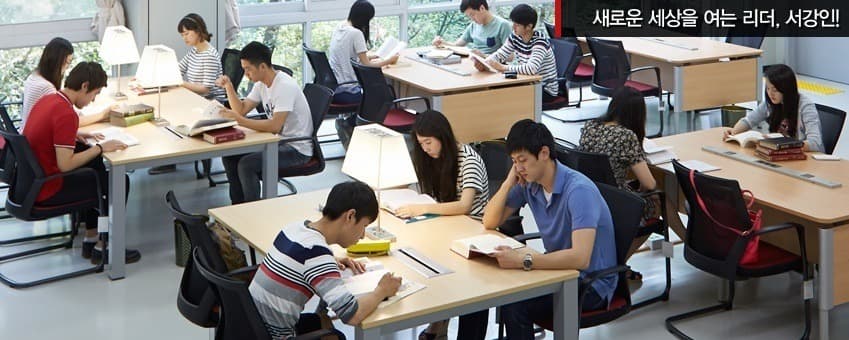
Just like in Vietnam, there are 3 levels of education in Korea: primary, middle and high school. Let's see what other regulations the education here has compared to Vietnam.
The modern school system in South Korea consists of six years of primary education, three years of lower secondary education and three years of high school. Students are required to attend primary and lower secondary education but do not have to pay for education, except for a small fee called the “School Operations Support Fee". This fee varies from school to school. The International Student Assessment Program – initiated and directed by the Organization for Economic Cooperation and Development (OECD) – currently ranks South Korea's science education third best in the world and higher than the OECD average. South Korea also ranks second in mathematics and literature, ranking first in problem solving.
For more information please contact with
Greatlink International Study Abroad Co., Ltd.
Hotline: 0936.77.33.86/0868.81.79.81
Email: [email protected] OR [email protected]