An overview of studying in the UK
1. General information
- Country name: England/ United Kingdom (UK)
- Capital: London
- Area: 130,395 km2
- Population: 53.01 million people
- Currency: British Pound Sterling (GBP) £
- Time zone: GMT (UTC+0); summer:BST (UTC+1)
- Language: English - (UK English)
History
England was unified in the 10th century and its name, London (London), is the largest city of the kingdom, and is confirmed by the majority of studies as the largest city in the European Union.
England was the birthplace of the Industrial Revolution in the 18th century, which changed the course of world history, making it the world's leading economic centre, and later the powerful British Empire, which had a worldwide system of colonies nicknamed "the land of the sun that never sets".
England is also one of the most influential cultural centres in the world. It is the birthplace of English, the world's most widely spoken language, and the Church of England. English law is also the foundation for many other legal systems in many countries around the world.
2. Natural conditions
Geography
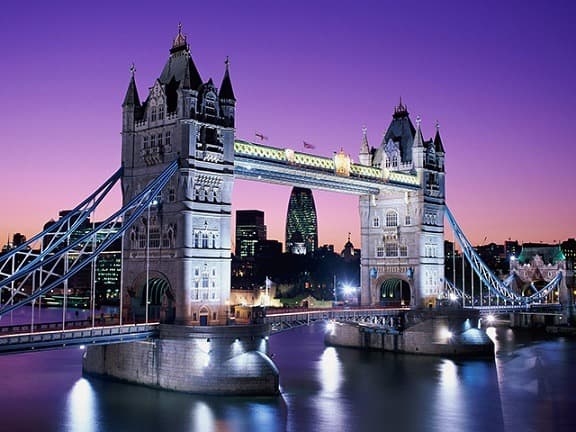
Geographically England consists of the central region and two-thirds of the British Isles, plus offshore islands such as the Isle of Wight and the Isle of Scilly. It is bordered by two of the British brother states—Scotland to the north and Wales to the west. It is closer to the European continent than to any other part of the British continent.
The country is separated from France by a 34 km wide strait, although the two countries are connected by the Channel Tunnel near Folkestone. Because England is on an island, it is surrounded by the Irish Sea, the North Sea and the Atlantic Ocean.
Climate
England has a mild marine climate which means that the country's temperature limits are not lower than 0 °C in winter and not higher than 32 °C in summer. The climate is often wet and variable. The coldest months are January and February, especially February on the English coast, while July is usually the hottest month. The months are mild to warm with little precipitation being May, June, September and October.
The greatest influences on British weather are from its geographical proximity to the Atlantic Ocean, England's northern latitudes, and the warm waters surrounding the Gulf Stream. England receives fairly heavy rainfall throughout the year, with autumn and winter being the lowest periods of humidity – geographically the Lake District receives more rainfall than anywhere else in the country. Since the beginning of the storage of weather data, the highest recorded temperature was 38.5 °C on August 10, 2003 at Brogdale in Kent, while the lowest temperature was −26.1 °C on January 10, 1982 at Edgmond, Shropshire.
3. Cultural and social conditions
England - a multicultural country. Throughout the history of the United Kingdom, many different races and cultures have had an influence on the culture of the kingdom.
United Kingdom There has long been a tradition of accepting migrants from all over the world, many of whom have permanently settled here. Thousands of families have lived in England as their homeland, creating a multi-ethnic, inclusive, and culturally diverse society. More than a quarter of a million international students study here.
The British love to go to public places to have fun. Theaters, music halls, and galleries are available in big cities and towns; big sporting events are held on weekends; pubs and restaurants are everywhere. Because United Kingdom is also home to many famous composers, authors, dancers and actors – world-renowned for performing arts as well as literature.
England is also an ideal tourist destination. Because of its close proximity to each other, it is easy to get to know these countries. The network of airlines, railways, long-distance buses and city buses will take you wherever you want to stay. United Kingdom; so you don't need to have your own car as in some other countries. Most of the plus-plus transportation is available for students at special rates.
If you want to visit other European countries, it's easy. Tunnels across the straits, low-cost flights and convenient ferry boats make you never feel too far from the big cities and capitals of European countries. The proximity to other European countries facilitates many VQA training institutions to introduce jobs and combine student training in those countries.
4. the economy
The United Kingdom is the seventh largest economy in the world and the third largest in Europe after Germany and France. After Britain did the Industrial Revolution Britain became the world's largest empire. That's what Britain has been called for 300 years, the United Kingdom.
In terms of trade, the UK is a net importer of goods with a relatively large trade deficit under control. Its biggest trading partner is the eurozone, more specifically Germany, which is obviously no surprise since goods from Germany to the UK are very convenient just across the strait.
Trade with the eurozone accounts for more than half of the UK's business. On an individual basis, the US remains the UK's major trading partner no less than Germany.
Britain is also the oldest financial centre in the world.
The UK is at the forefront of the chemical and pharmaceutical sectors and in important engineering industries, notably aviation, the weapons industry, and the software industry manufacturing sector. London, home to the London Stock Exchange, the UK's main and largest stock market, is the UK's financial centre—100 of Europe's 500 largest businesses are based in London. London is the largest financial centre in Europe, and as of 2009 it was also the largest financial centre in the world.
5. british education system
With an undeniable reputation, the education of United Kingdom has been a solid pillar for the world education. Currently, the UK education system is divided into two different types but they are all interconnected. Two parallel education systems exist in the United Kingdom: the general education system of the three territories of England, Wales and Northern Ireland, and the education system of Scotland.

More specifically, international students come to the UK mainly to study undergraduate and graduate programs. Brief information about these programs is as follows:
Bachelor's programmes
For students aged 18 and older. The program lasts 3 – 4 years, at the end of which students are awarded an ordinary bachelor's degree or honors bachelor's degree. The school year is divided into two to three semesters.
There are many reasons to pursue a university degree in the United Kingdom and the number of majors to choose from is even greater than the reason for studying. Hundreds of UK universities and colleges offer a wide range of majors, from accounting to zoology. A UK university course will enable you to delve deeply into a major you find truly exciting, in a country renowned around the world for its research quality and the reputation of its professors and faculty.
Students study subjects in their majors and take final exams. Requirements for international students include proficiency in English (at least IELTS 6.0), an additional year of high school, also known as the Foundation Year, or high marks in the A Level exams.
Postgraduate Courses
- Master Preparation Course
The Pre-Master's course can last from one semester to one academic year and includes theory study, introduction to culture and teaching a foreign language. You may need to take a Pre-Master's course if your qualification or your English skills do not meet the standards required for a UK Master's degree. Many courses will ensure you can continue your master's studies at a certain university.
- Certificate/ Postgraduate Diploma (PG Cert/Dip)
Graduate Certificates and Diplomas are teaching-based graduate courses that last a year and usually do not require research. These degrees are often accepted as professional qualifications, giving you a great start in your chosen career.
- Master Class (MA, MSc, LLM, Med, etc.)
Master's courses are based on classroom teaching and usually last a year and consist of two parts. You will have to complete several subjects (join lectures and discussions, write essays and take exams) and do your own research to do your thesis.
- Master of Research (MRes, MPhil)
For a master's degree in research in the UK, you usually don't go to lectures; instead you will spend the year doing research. Your final GPA will be determined by the quality of your thesis.
- Master of Business Administration (MBA)
MBA is an intensive teaching-based master's of business course, and will really give you the opportunity to grow on the management level. This is the most known and preferred postgraduate degree.
- PhD (PhD)
PhDs, also known as doctorates, last from three to four years, during which time you will do a research project. In the final year, you will have to submit an essay of about 100,000 words.
The new doctoral program includes a number of courses and research topics and will give you the opportunity to conduct interdisciplinary research.
6. The life of international students in the UK

Type of housing
As well as other countries, international students study abroad english You can choose one of 3 types of housing: dormitory, homestay or private room/house.
However, with experience in the field of studying abroad, New Ocean Study Advice recommends that you choose to stay in a hostel during the first semester to be able to get used to the new environment as well as quickly integrate, absorb new features in the British culture.
Transportation Facilities
Public transport in the UK varies from local to local and whether it is convenient or difficult to travel depends a lot on where you study. However, you can still fully control them.
Majority of students study abroad english usually move by public transportation because of its convenience as well as super cost savings. You can move easily and quickly in the city by bus, subway or simply... walk.
If you want to travel and explore other cities in the UK, the train or intercity bus is the optimal choice for you.
Living expenses
The cost of living in the UK is much less than in the US and Australia. The cost varies by region, in London or cities in the South East will often be more expensive than in the North, Wales, Scotland and Northern Ireland. However, the cost of living will be largely determined by how you spend. Usually the cost of living in the UK will range from 10,000 – 12,000 pounds / year.
Scholarship Opportunities
Not only is it on the list of countries with the best education in the world, the UK is also one of the countries that provide the largest number of the planet. In the UK you can find many different types of scholarships such as: government scholarships, school scholarships, professorships, organizations / businesses, ... If you do well in the process of studying, students can fully apply for scholarships in the next academic year.
Work extra.
According to the UK Government regulations, you are only allowed to work an extra 20 hours/week when study in the UKTherefore, working part-time in restaurants, restaurants, supermarkets, or babysitting, teaching foreign languages is often the choice of the majority of students.
The pay you can get is usually hourly, averaging £4 – 7 per hour overtime. If you're lucky enough to work for a company or school, you can earn £10 per hour.
=> So, is he the ideal destination for international students???
Education in the UK is one of the most advanced in the world with a team of enthusiastic teachers and quality curriculum, diplomas are widely recognized internationally will be an advantage for students after graduation.
Currently, over 800,000 international students are following Study in the UK – a high-quality educational environment. In particular, English is the father of the world's language, so be sure to study abroad english and also think that you will get the perfect English training conditions from the native people.
In the United Kingdom, you can shorten the time by a course. To get a bachelor's degree, you take 3 nǎm. Master's – 1 nǎm. Doctorate – 3 nǎm. That means you save on tuition fees, accommodation and more importantly, time that can not be calculated.
In the United Kingdom, there are over 3,000 institutions ready to accept international students. However, schools in the UK are not graded according to quality levels, so you need to choose the right school and course for you. The UK is really a desirable study destination for Vietnamese students in particular and international students worldwide in general.
Source: Internet.
For more information about applying for a UK student visa please contact:
Greatlink International Study Abroad Co., Ltd.
Hotline: 0936.77.33.86/0868.81.79.81
Email: [email protected]