
Country Overview Singapore – About Singapore
Overview of Singapore
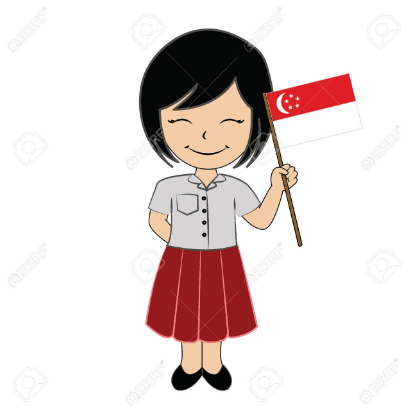
Country of Singapore
Singapore: officially the Republic of Singapore, is a city-state and island nation in Southeast Asia. The island lies off the southern tip of the Malay Peninsula and is 137 km north of the equator. The territory of Singapore consists of a rhombus-shaped main island, and about 60 smaller islands. Singapore has a hot and humid climate year-round, a population of just over 5 million people (in 2013) and a multi-ethnic culture – This is what makes Singapore a unique tourist attraction every year.
Information about Singapore:
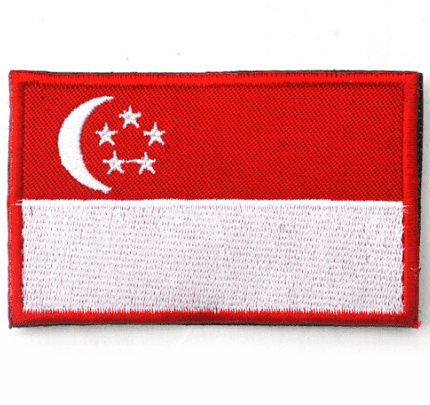
Flag of Singapore
1. Name of the country: Singapore, officially the Republic of Singapore. The official English name is Republic of Singapore.
2. Capital: Singapore City.
3. Geographical location: Singapore's territory is separated from the Malaysian Peninsula by the Johor Strait. To the south is the Singapore Strait, which borders the South China Sea to the east and the Gulf of Malacca and the Indian Ocean to the west. Singapore's neighbours are Malaysia, Brunei Darussalam and Indonesia.
4. Area: 712km2, of which the land area is 682.7 km2 with a coastline of about 150.5 km.
6. Climate: Singapore doesn't have four seasons like other countries far from the equator. The weather here is almost unchanged all year round with plenty of rainfall.
7. Population: 5,399 million people (2013).
8. Ethnic groups: Singapore has a diverse ethnic composition, but Asians predominate: 75% of the population are ethnic Chinese, with significant minorities of Malays, Indians, and Eurasians.
9. Religion: Buddhism is the most commonly practiced religion in Singapore, with 33% of the population declaring themselves Buddhists in the most recent census. The second most commonly practiced religion is Christianity, followed by Islam, Taoism, and Hinduism. 17% of the population do not join any religion.
10. Languages: The four official languages are English, Malay, Chinese and Tamil.
11. Currency: Singaporean Dollar
12. National Day: August 9, 1965.
13. State institutions: The constitution was established on 3 June 1959, and was amended in 1965 (based on the Constitution prior to Singapore's independence) to establish Singapore as a parliamentary republic.
14. Executive agencies: The president is the head of the executive branch and serves a six - year term.
15. Legislative bodies: An independent parliament consists of 84 seats, elected for a five-year term. There are also 9 nominated MPs, 3 opposition Party candidates with the closest number of votes to the winner can also be selected as MPs.
16. Time zone: (UTC+8)
18. Internet domain names: .sg
19. Telephone number: +65
Geography
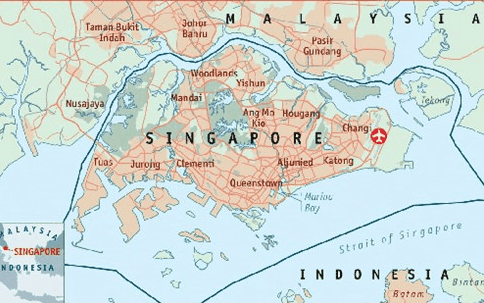
Map of Singapore
– Latitude: from 1o09′ N to 1o29′ N
– Longitude: from 104o36′ East to 104o24′ East
At that latitude Singapore is only 137 km north of the Equator.
The main island has a width from east to west of 42 km and a length from north to south of 23 km. The total area of Singapore is 712km2, of which the land area is 682.7 km2 with a coastline length of about 150.5 km. The territory of Singaporc is separated from the Malaysian Peninsula by Johor. In the south is the Singapore Strait, which borders the South China Sea to the east and the Gulf of Malacca and the Indian Ocean to the west. Singapore's neighbors are Malaysia, Brunei Darussalam and Indonesia.
Climate
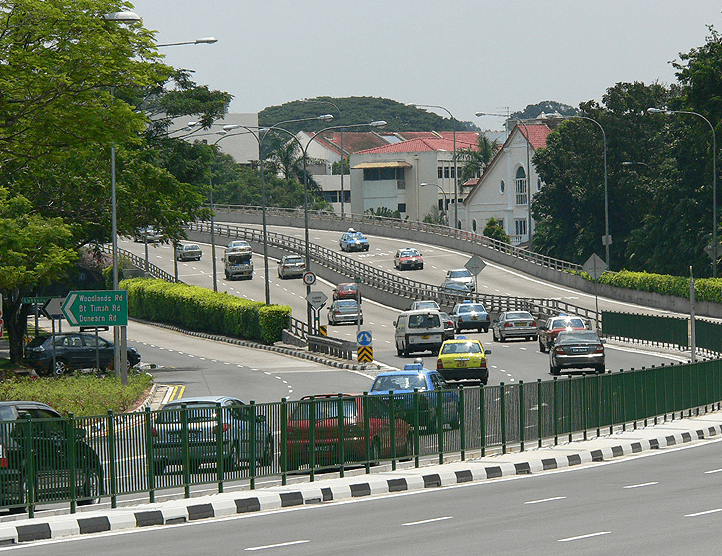
Climate of Singapore
The climate of Singapore is similar to Vietnam's climate, which is tropical and sunny all year round. With the impact of the coastal area, the temperature of Singapore almost remains between 24oC and 32oC. Singapore has a very high humidity, about 84.4%. December is a continuous rainy month, February is a sunny month throughout the month, July and August are the hottest months with high temperatures reaching their maximum.
Politics

Politics of Singapore
– Singapore is a parliamentary republic, with a unicameral parliamentary government under the Westminster system representing the constituencies. The country's constitution establishes a representative democratic political system.
– Executive power belongs to the Cabinet of Singapore, led by the Prime Minister, and to a much lesser extent the President.
– The National Assembly serves as the legislative branch of government. Members of the National Assembly are elected, non-elected and appointed members.
– Singapore's judicial system is based on English common law, but has significant local differences. Jury trials were abolished in 1970, leaving judicial decisions entirely in the hands of appointed judges.
– At present, Singapore still maintains the appearance of a democracy but the ruling People's Action Party (PAP) has dominated the politics since gaining independence by creating major barriers to opposition political parties, and the PAP now holds more than 90% of the seats in the National Assembly.
Economy
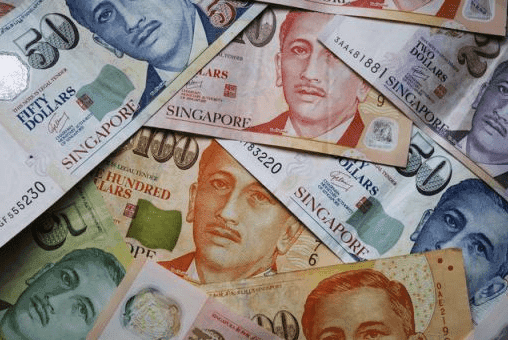
Money Singapore
Country of Singapore There are almost no natural resources and all raw materials have to be imported from outside. Singapore has few coal, graphite, lava, clay; there is no fresh water; the cultivated land is narrow, mainly for growing rubber, coconuts, vegetables and fruit trees, so agriculture is not developed, annually food must be imported to meet the domestic demand. Singapore has infrastructure and some of the leading high - development industries in Asia and the world such as: seaports, shipbuilding and repair industry, oil refinery industry, processing and assembly of sophisticated machinery. Singapore has 12 large industrial areas, the largest of which is Jurong Industrial Park. Singapore is a leading country in the production of electronic computer drives and semi - conductors. Singapore is also the leading oil refinery and transit transport hub in Asia. Singapore is also considered a leader in the transition to a knowledge - based economy.
The economy of Singapore is mainly based on trade and services (accounting for 40% of the national income). The economy of Singapore since the late 1980s has achieved the highest growth rate in the world: 1994 at 10%, 1995 at 8.9%. However, since the end of 1997, due to the impact of the currency crisis, the Singapore dollar has been devalued by 20% and the economic growth in 1998 dropped sharply to only 1.3%. Since 1999, Singapore began to recover quickly: In 1999, the growth rate was 5.5%, and in 2000 it reached more than 9%. Due to the impact of the September 11th event, the decline of the world economy and then the SARS epidemic, the economy of Singapore was severely affected: In 2001, the economic growth rate was only -2.2%, 2002, 3% and 2003 only 1.1%. Since 2004, the strong growth rate: in 2004 reached 8.4%; 2005 reached 5.7%; 2006 reached 7.7% and 2007 reached 7.5%. In 2009, the GDP increased only 1.2% due to the impact of the economic crisis.
Singapore is also seen as a leader in the transition to a knowledge economy. Singapore is implementing plans by 2018 that will make Singapore a world-leading city, a focal point of new networks in the global and Asian economy and a business-sensitive diversified economy.
Culture
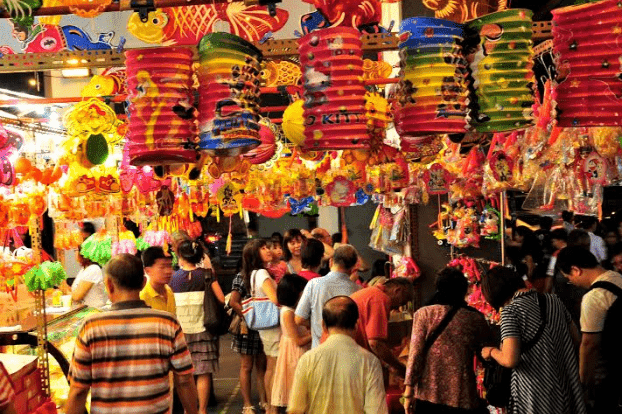
Culture of Singapore
One of Singapore's most striking features is its diverse ethnic population thanks to the country's favorable geographical location and commercial achievements. Founded as a trading hub by Sir Thomas Stamford Raffles on 29 January 1819, Singapore – a small fishing village that has grown ever since – has quickly attracted immigrants and traders from China, the Indian subcontinent, Indonesia, the Malay Peninsula and the Middle East.
Fascinated by the prospect of a better future, immigrants brought their own cultural, linguistic, customary and festival identities to Singapore. Cross-marriages and harmonious cohabitations of peoples weave a colourful cultural picture, forming a diverse Singaporean society and giving the island a rich and vibrant cultural heritage. By the end of the 19th century, Singapore had become one of Asia's most ethnically diverse cities with ethnic groups mainly Chinese, Malays, Indians, Peranakans and Eurasians.
Religion
Religion Singapore
Buddhism is the most widely practiced religion in Singapore, with 33% of the population declaring themselves Buddhists in the most recent census. The second most widely practiced religion is Christianity, followed by Islam, Daoism, and Hinduism. 17% of the population joined no religion. The proportion of Christians, Daoists, and non-religious people increased between 2000 and 2010, with each group increasing by 3%, while the proportion of Buddhists dropping. Other faiths remain largely stable in terms of population proportion.
Cuisine
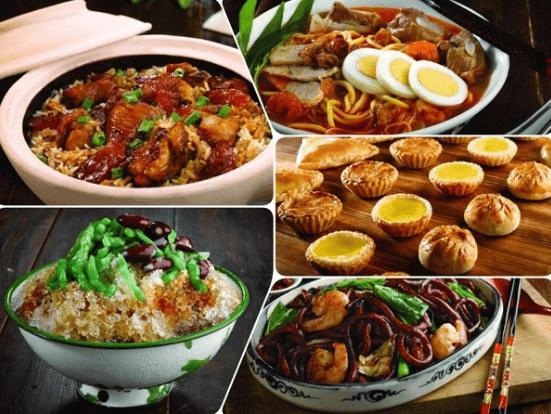
Singaporean Cuisine
With its rich multicultural heritage, Singapore is a melting pot of culinary flavours. You can spot the diversity of Singaporean culture in the myriad ethnic dishes from China, Malay, to India, Peranakan and beyond.
Stroll around the various neighbourhoods, and you'll come across Malay Islamic-style dishes, South Indian thali vegetarian trays, North Indian naan and briyani rice mixes, Cantonese dim sum, Hainan chicken rice, Peking roast duck, Hokkien noodles (fried noodles from Fujian province, China) and popiah rolls (beef jerky) that are readily available at food centres and restaurants throughout Singapore.
Chinese food is one of the main elements in Singaporean cuisine. The Chinese believe in combining ingredients to enhance the harmony of yin and yang in the dish. The food is also used symbolically, as noodles symbolize longevity, oysters symbolize good fortune and fish symbolize prosperity.
National holidays
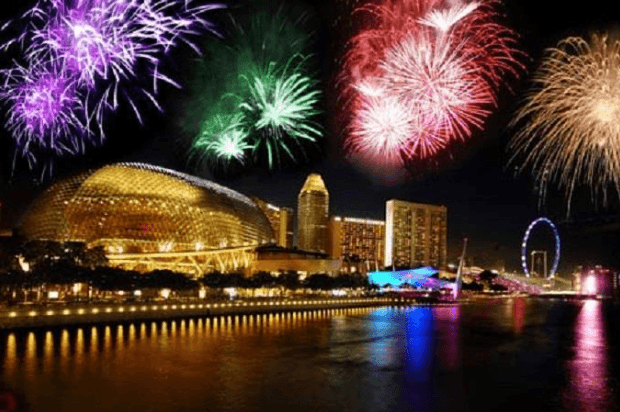
Singapore National Day
Thaipusam
Thaipusam Singapore Festival is an ancient Indian festival that no longer exists but is still celebrated in Singapore.
According to Indian tradition, the Thaipusam festival is celebrated on the anniversary of the birth of a Hindu deity to express worship, praying for happiness and peace for everyone.
At this festival, many activities are held such as traditional dances, music programs and people can participate in pilgrimages with a lot of “horrible” rituals such as piercing metal through the body parts. This is a way to show worship to the god and show devotion.
Festival of Lights (Deepavali)
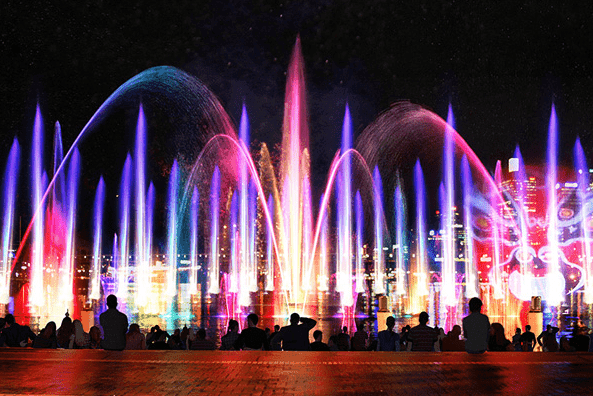
Singapore Light Festival
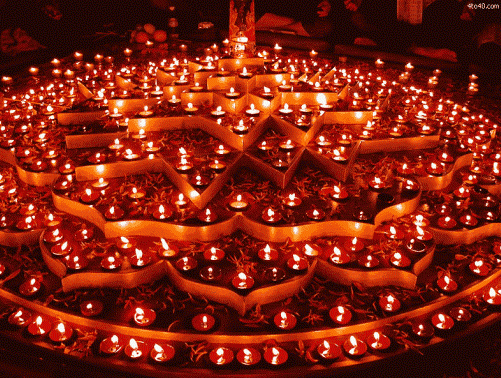
This is a Hindu festival, the light festival means the victory of good over evil and light shines to dark places. On the occasion of the light festival, Hindus will decorate their homes with a variety of lamps, visit friends and organize many activities such as displaying handicrafts, gifts ... Coming to Singapore on this occasion, you will be admiring the street with all kinds of shimmering lamps to leave an unforgettable impression.
Hari Raya Puara Celebration
It's one of the two big Muslim holidays in the... Country Singapore. It is officially celebrated on the moon day of the month Syawal, which marks the end of Ramadan in Islam. Hari Raya Puara is a time for people to forgive each other's mistakes and also to strengthen ties in the community. During Hari Raya Puara people visit each other and organize many attractive activities such as shopping at the night market with the typical Malaysian items.
Buddha's Day
Singapore Buddha's Day
This is the biggest holiday of Buddhism. On this day, people often give oats to the monks and feed the poor. In addition, the streets and temples are also decorated with lamps and flowers to pay homage.
Mid-Autumn Festival

Singapore Mid-Autumn Festival
In Singapore, Mid-Autumn Festival is a huge festival. At this time, Chinatown is filled with colorful lanterns. If you come to Singapore on this occasion, you will not forget the vivid and vibrant images with shimmering lanterns. At Mid-Autumn Festival, families in Singapore will have the opportunity to gather together to share the joy and coziness.
New Year Holidays
As well as other East Asian countries such as Japan, South Korea ... due to the influence of many Western cultures and civilizations, Singapore has long celebrated the New Year. However, the time to welcome the New Year of Singapore as well as South Korea, China ... usually takes place not long, the Tet atmosphere is only within a few days from the official date of 1/1 of the first calendar year.
Singapore National Day
Singapore National Day
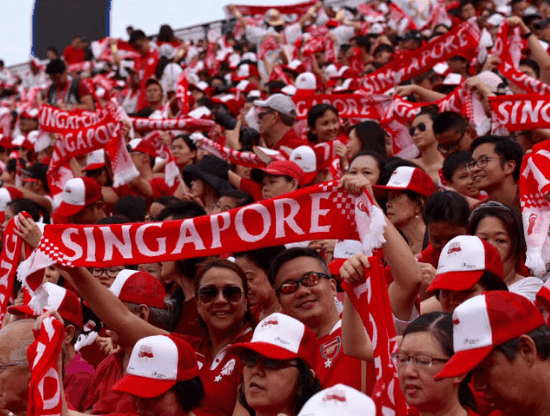
Singapore's National Day is on August 9. On this day, Singaporeans will usually gather at parades, fireworks displays or air force performance venues such as Marina Bay Sands or the Esplanade Theatre. On the occasion of the National Day, Singapore not only organises these activities but also volunteers to provide information about the National Day and Singapore.
Education
Education Singapore
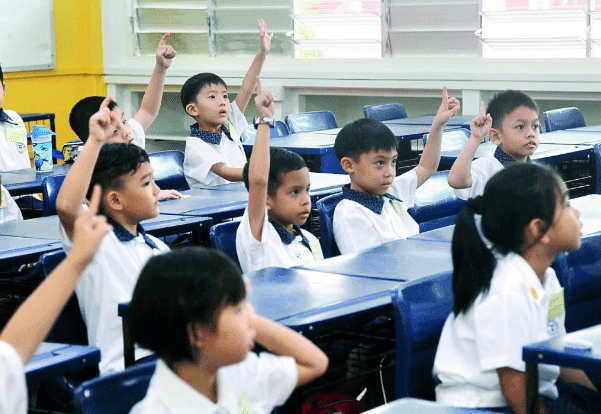
Education at the primary, secondary, and tertiary levels is mostly supported by the state. All institutions, public or private, must be registered with the Ministry of Education. English is the language of instruction in all public schools, and all subjects are taught and tested in English except for essays in “native tongue” While the term “native tongue” generally refers to the first language, it is used to refer to the second language in Singapore's education system, as English is the first language. Students who have been abroad for a while, or have difficulty with their “native tongue”, are allowed to have a simplified outline or skip the subject.
Education consists of three phases: primary, secondary, and pre-university, where only the primary level is required. Students begin with 6 years of primary education, which consists of 4 years of basic and two years of orientation, with the curriculum focused on English language development, native language, mathematics, and science. Secondary education lasts 4-5 years, and is divided into Specific, Fast, General (Academic), and General (Real) departments in each school, based on each student's ability level. The basic curriculum classification is similar to that of primary school, but the classes are much more specialized. Pre-university education takes place for 2-3 years in colleges, most of which are called Elementary Schools. Some schools are free in their curriculum and are called autonomous schools. These schools exist from the secondary level upwards.
Sport
Sports Singapore
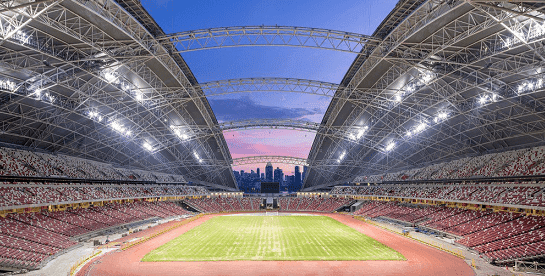
Although Singapore is a small country, the sporting scene in Singapore is very developed. People here enjoy exercising and sports for their health and entertainment. Most countries love football and Singaporeans do too.
Football is considered the king sport here. Singapore has its own professional football league, called the S.League. Launched in 1996, the league now consists of 10 teams competing against each other in stadiums across the country. In 1998, 2004, 2007 and 2012 the Singapore national football team became champions of the Tiger Cup, the top football league in Southeast Asia.
Besides, other sports such as badminton, swimming, bodybuilding, rugby, etc. are also popular. The Singaporean government has always created conditions for people to participate in sports training by investing in many public works such as swimming pools, football fields, sports centers, etc. In the morning and on weekends, people gather in parks where there are many training facilities. Thanks to the strong investment of the government, Singapore has been considered one of the sports giants in Southeast Asia for many years.
With the information that has been summarized in the most concise and complete way, I hope you have gathered for yourself certain knowledge and understanding about the Lion Island - A young but extremely rich country with a harmonious combination of a multi-ethnic culture.
For more information about applying for a Singapore visa please contact:
Greatlink International Study Abroad Co., Ltd.
Hotline: 0936.77.33.86/0868.81.79.81
Email: [email protected] OR [email protected]