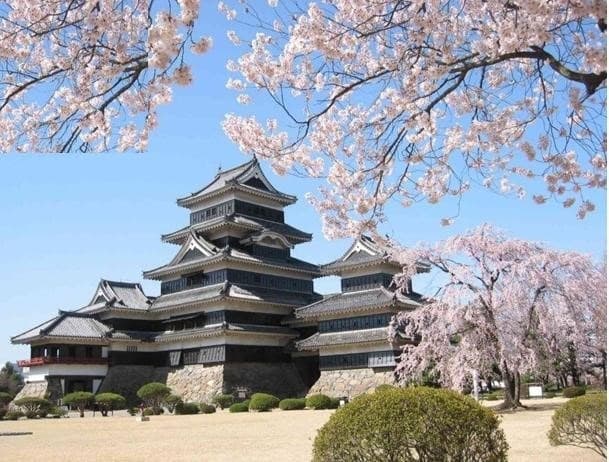

You participate in studying abroad in Japan often meet many questions that need to be answered. In the article below we would like to gather some questions as well as problems that you often encounter such as study time, accommodation costs, extra work .... Please refer to it!
1. Which study abroad program is the most selected?
The program that is most popular with many people is the program of studying in Japan while working and studying. The reason for such a wide selection is that this program is suitable for all subjects. The tuition fee is moderate, the opportunity to work more.
2. At what times of the year can you apply to study in Japan?
1 year study abroad program in Japan will have 4 enrollment:
Enrollment in January every year (the duration of Phase 1 is 1 year and 3 months).
Enrollment in April every year (the duration of Phase 1 is 1 year or 2 years).
Enrollment in March 2019 every year (the duration of Phase 1 is 1 year and 9 months).
Enrollment in March 2019 every year (the duration of Phase 1 is 1 year and 6 months).

3. Basic health requirements when studying in Japan
Studying in Japan does not require strict health issues such as medical examination. However, if you go to Japan as an Intern, there will be requirements such as: no hepatitis B infection, no color blindness or malformations, Students do not require such nhé.
4. What will students study in Japan? What to do? What is the study time like?
When you come to Japan to study, you will go through 2 main stages:
In the first stage, you study Japanese and preparatory programs at intermediate level, college, university, postgraduate, etc. from 1 to 2 years.
Stage 2 you study the secondary level (2 years), College (3 years), University (4 – 5 years), High School (2 years), ...
You can also choose any major you like. After finishing the course, students will be able to participate in internship programs.
Your job during studying in Japan is part-time work. According to the regulations of the Japanese Government, international students are allowed to work overtime 28 hours / week.

5. What kind of work can I do if I study in Japan? How is my salary paid?
The extra work you will do during study abroad will be: Packing canned rice, working in the laundry, working in the frozen workshop, working in the frozen workshop, working in the vegetable processing plant, the Food Packaging Center, wiping the glass doors of high-rise buildings, construction workers, carpentry workshops, cleaning factories, industrial parks, ...
Salary will be paid according to the working hours. Your salary will depend on your Japanese ability, agility, and health. Usually it ranges from 750 yen per hour to 1200 yen per hour.
6. What is the amount of money I have to pay when I register to study in Japan? How long will I be able to work part-time after coming to Japan?
The amount of money you have to spend when registering to study in Japan will fall in the range of 180 million - 260 million VND (depending on the tuition rate of the school, the different disciplines). This amount includes:
Tuition, books, uniforms, insurance... for the first year.
Housing fee (dormitory) 6 months.
Air tickets from Vietnam to Japan.
Expenses for paperwork such as:
Health certificate.
Sign up for insurance.
Register your phone, internet (if desired).
Apply for a personal card (like a Vietnamese ID card).
Sign up for a part - time job.
All of these procedures will take about 20 days. Therefore, the best time for you to go to work is after 1 month to Japan.
7. Is there a difference in the cost of studying in Japan between regions?
The cost of studying abroad in Japan does not differ between regions, but only varies between schools. Depending on the tuition rates of the schools offered will be different. But in general, the difference is not significant.
8. Graduated from a university in Vietnam, want to go to Japan to study 2 years, then will go to work in Japan?
This issue of the is not difficult, just students transfer visa from the student visa to work visa is.
9. While studying or working in Japan, if you are unfortunately injured or sick, what is the insurance policy like?
If you are unfortunately injured or sick, your insurance policy covers 91% of the total amount you have to pay for hospital fees and medicines.
Example: If you have appendicitis, the total cost of surgery, medical treatment and medicine is 100 million VND, the Japanese government will pay you 91 million VND, the remaining amount is only 9 million VND. For the special case of “death”, the maximum compensation is 1,000,000 yen / 1 person = 260 million VND / person.
10. To register for a study abroad program in Japan, what are the conditions? What are the procedures? What is the process of processing a study abroad dossier in Japan?
Conditions for you to enroll in the study abroad program in Japan are: a minimum of high school graduation, age under 30 (no academic requirements). Have the will to ambitiously want to change your life to rise in difficulties.
15. Can I study abroad without a high school diploma?
At least when studying abroad must have a high school diploma, all fake diploma papers are not accepted and missed the visa.
16. Can I study in Japan if I am 30?
There is no written age limit for studying in Japan. But if you are over 30 years old and want to apply for a long-term study visa, you will have to declare why you want to come and study in Japan, and the process is also more rigorous.
17. Can I study in Japan with an average high school graduation grade?
It will depend on your school! Some schools do not require a transcript test, but usually good schools will test your high school performance and require an average point of more than a certain level, such as above 6.6.

18. Does the Japanese language N3 and then go to Japan need to take the level assessment test again?
When you come to Japan, the schools will have an entrance exam to assess your qualifications whether you have a certificate or not. This means that you will have to take the exam, and then based on this result to arrange a more suitable class for you.
19. Can I study in Japan with a tattoo?
If you have a lot of tattoos on your body and the area of the tattoo is wide, it is likely that you will be rejected by some schools. However, small tattoos will still have a chance. So if there is a large tattoo, remove it!
For more information, please contact:
Greatlink International Study Abroad Co., Ltd.
Hotline: 0936.77.33.86/0868.81.79.81
Email: [email protected] OR [email protected]